
The tension I put into stretching each canvas was bordering on too tight when, I applied the first layer of primer on the surfaces. The back supports nearly bowed to snap. They creaked for an hour under the pressure – It was nerve wracking. Fortunately the supports returned to their original state when the layers were dry.
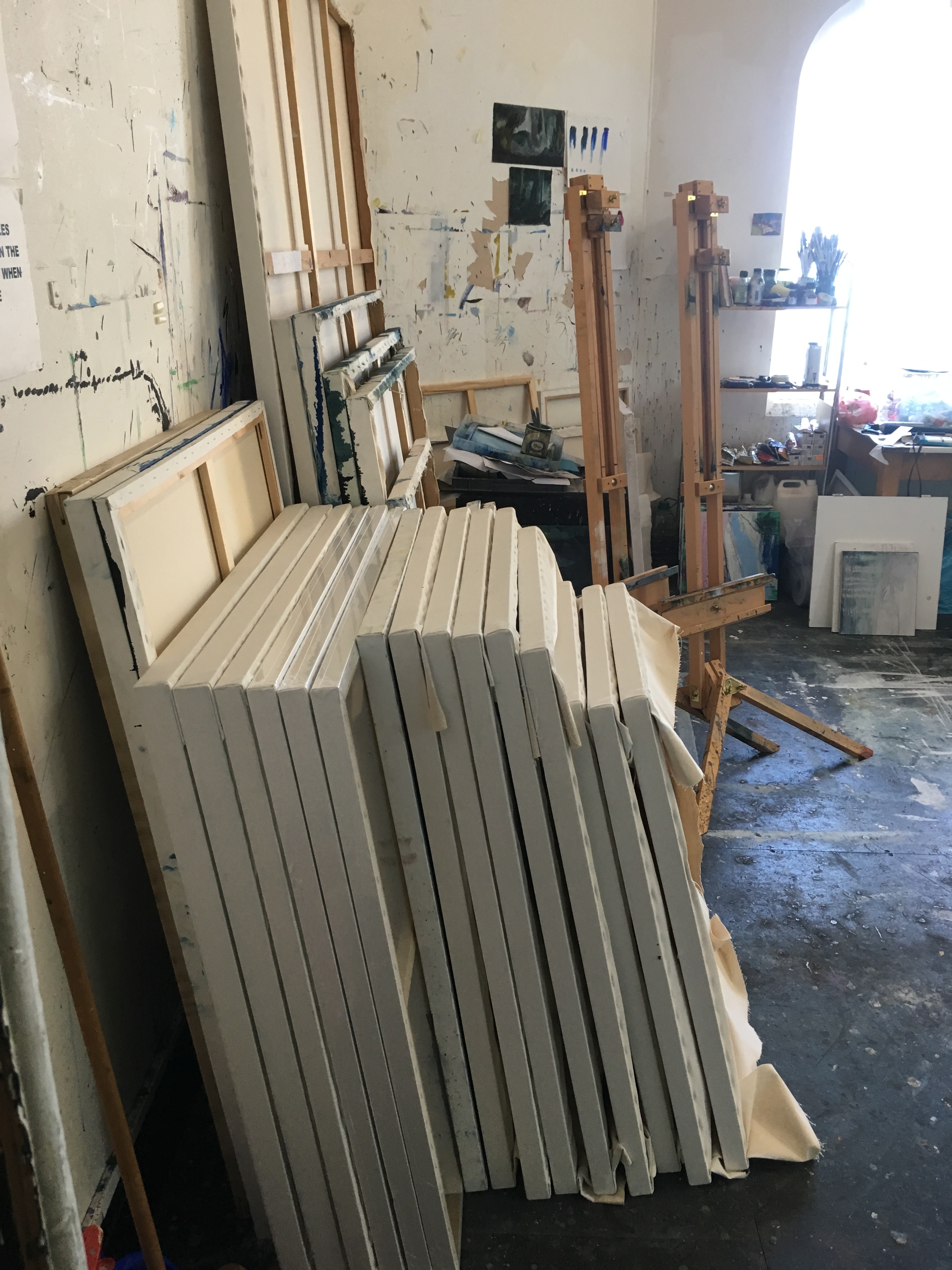
I was given and have received through my own badgering of staff at the uni, and kind donations from a peer, a few dozen canvas stretcher bars. January 2019 I stretched a few of these with heavy weight canvas.
I primed all the canvases with thin layers of gesso 4 times. Not once taking a full thickness gesso to them. This was a mistake. In some but not all, oil paint seeped trough the back and sides of the canvases posing a threat to the paintings life span as they could rot this way. A rethinking of the priming process was in order.
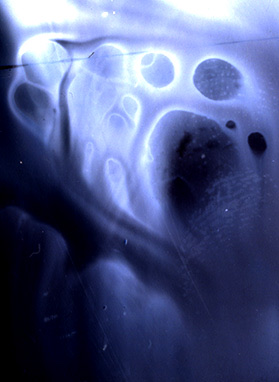
The finished images on the canvases were incredibly hard to work into without leaving a trace of my hand. For the dialogue with the painting was saying otherwise. From my experiments with a type of cliche verre that involved photo developer and fix from the image making stage, I longed for my paintings to be brought up to some sort of abstract photorealist technique. After the second year of university had come to an end, I set about refining my previously touched upon priming method to create a smooth but flexible painting surface.
 jonathanretallick.art